 Skip to content


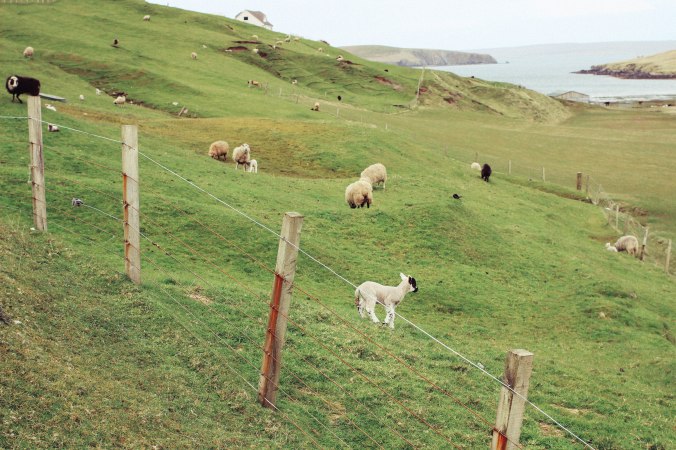
 One of the nicest things about this time of year in Shetland (apart from lighter nights!) is the sight of Lambs. Lambing starts end of April and goes on throughout May, and all the photos in this post have been taken in the last few weeks.

 The Shetland is the smallest of the British breeds and is believed to be of Scandinavian origin. It retains many of the characteristics of wild sheep such as natural hardiness, longevity and an ability to thrive on a low level of food intake from our heather clad hills and peat moors.


 Shetland Sheep are naturally good mothers, they require little assistance when giving birth and easily lamb by themselves. You can see from the photos that the mothers fairly keep an eye on you when your near their babies! Hill sheep in Shetland average 25 kilos and the new born lambs birth weight can is ususally 1 to 2 kilos and sizewise not much larger as a cat.


 Ewes that lamb on the hill usually give birth at dusk or dawn, this is natural instinct to lamb in semi-darkness to avoid predators such as the Bonxie and Ravens. By lambing at night this timing gives the lambs a chance to get to their feet. Lambs become quite independent after a week or two and start to graze and chew the cud.


 At this time of year Shetland hills echo with the loud bleating of straying lambs followed by the answering call of its mother.
 If you would like to make your own Peerie Shetland Lamb you might like our newest kit! The Peerie Sheep, this was designed by Sandra Manson who works at J&S and was inspired by all the lambs in Shetland at spring time.
til next time, happy knitting!
Photos by Jan Robertson and Ella Gordon
If you would like to make your own Peerie Shetland Lamb you might like our newest kit! The Peerie Sheep, this was designed by Sandra Manson who works at J&S and was inspired by all the lambs in Shetland at spring time.
til next time, happy knitting!
Photos by Jan Robertson and Ella Gordon

